
What Is Fire Safety? A Complete Guide for Workplaces and Homes (2026)
What is Fire safety, it is the practice of preventing, identifying, controlling, and reducing the risks associated with fires to protect people, property, assets, and the environment. It involves a combination of fire prevention measures, fire protection systems, risk assessments, safety procedures, emergency planning, and training to minimise the likelihood of fires and ensure effective response if a fire occurs.
Why Is Fire Safety Important?
Fire safety is important because it helps prevent fires, protect human lives, reduce property damage, and ensure a safe environment at homes, workplaces, and public buildings. Effective fire safety measures allow organisations and individuals to identify fire hazards, control risks, respond quickly during emergencies, and minimise the impact of fire incidents.
Fire safety is not only about having fire extinguishers or alarms; it involves a complete approach that includes fire prevention, risk assessment, emergency planning, safety training, regular inspections, and maintaining fire protection systems. A strong fire safety approach reduces the likelihood of fires occurring and improves the ability to protect people and assets if an emergency happens.
What Are the Main Objectives of Fire Safety?
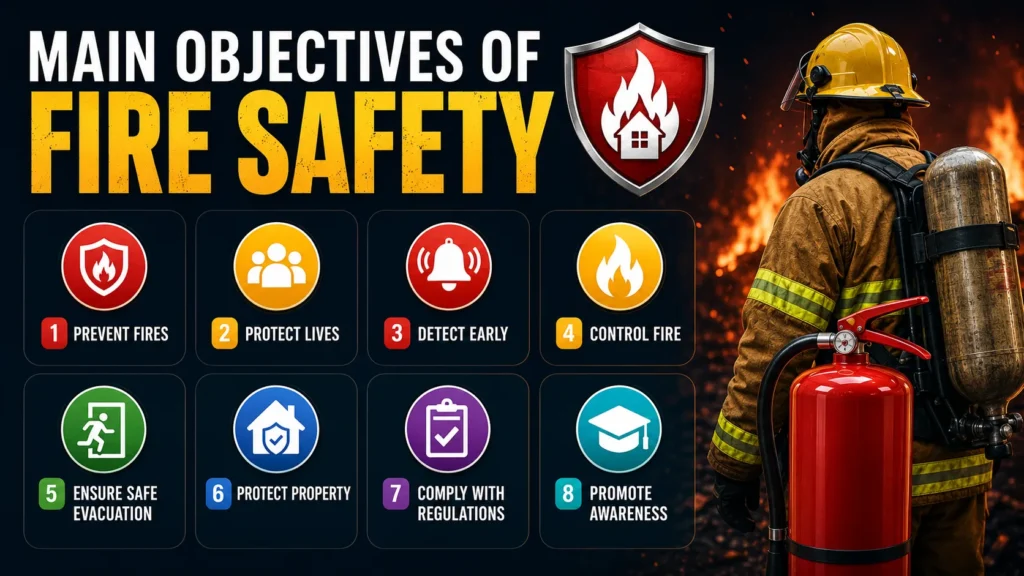
The main objectives of fire safety are to prevent fires from occurring, protect people and property, reduce fire-related risks, ensure effective emergency response, and minimise the impact of fire incidents. Fire safety aims to create a safer environment through hazard identification, risk control, fire protection systems, emergency planning, and continuous safety improvement.
A successful fire safety approach focuses not only on controlling fires after they start but also on preventing ignition, detecting fires at an early stage, enabling safe evacuation, and reducing potential damage to buildings, businesses, and communities.
Key Objectives of Fire Safety
1. Prevent Fires Before They Occur
The primary objective of fire safety is to prevent fires by identifying and controlling potential hazards. This includes managing ignition sources, maintaining electrical systems, storing flammable materials safely, and implementing safe working practices.
Examples of fire prevention measures:
- Electrical inspections and maintenance
- Safe storage of combustible materials
- Control of hot work activities
- Good housekeeping practices
- Smoking control procedures
2. Protect Human Life and Health
Protecting people is the most important objective of fire safety. Effective fire safety measures help reduce injuries and fatalities by ensuring that occupants can detect, escape, and respond safely during emergencies.
This includes:
- Emergency evacuation procedures
- Clearly marked escape routes
- Fire alarms and warning systems
- Fire safety training
- Emergency drills
3. Detect Fire at an Early Stage
Early detection helps limit the spread of fire and provides valuable time for evacuation and emergency response.
Fire detection objectives include:
- Installing suitable fire alarm systems
- Using smoke and heat detectors
- Carrying out regular testing and maintenance
- Ensuring alarms are accessible and functional
4. Control and Limit the Spread of Fire
Fire safety aims to prevent a small fire from becoming a major incident by using active and passive fire protection measures.
Examples include:
- Fire-resistant construction materials
- Fire doors
- Fire compartmentation
- Automatic sprinkler systems
- Fire suppression equipment
5. Ensure Safe Evacuation During Emergencies
A key objective of fire safety is to allow people to leave a building quickly and safely during a fire.
This requires:
- Clearly defined evacuation routes
- Emergency lighting
- Assembly points
- Evacuation plans
- Trained fire wardens or marshals
6. Reduce Property Damage and Financial Loss
Fire safety helps protect buildings, equipment, information, and business operations by reducing the severity of fire incidents.
Effective measures help organisations:
- Minimise repair costs
- Reduce downtime
- Protect valuable assets
- Improve business continuity
7. Comply with Fire Safety Regulations and Standards
Fire safety objectives include ensuring that buildings and organisations meet applicable legal and safety requirements. Compliance helps demonstrate responsible management of fire risks and protection of occupants.
This involves:
- Conducting fire risk assessments
- Maintaining fire safety records
- Inspecting fire protection systems
- Providing appropriate training
8. Improve Fire Safety Awareness and Culture
A strong fire safety culture ensures that everyone understands their responsibilities and actively contributes to preventing fires.
This involves:
- Regular fire safety training
- Awareness campaigns
- Reporting hazards
- Encouraging safe behaviour
Fire Safety Objectives Summary Table
| Objective | Purpose |
|---|---|
| Fire Prevention | Stop fires from starting by controlling hazards |
| Life Protection | Protect people from injury and loss of life |
| Early Detection | Identify fires quickly and provide warnings |
| Fire Control | Limit fire spread and reduce damage |
| Safe Evacuation | Enable people to escape safely |
| Property Protection | Reduce damage and financial losses |
| Compliance | Meet fire safety requirements and standards |
| Safety Culture | Encourage responsible fire safety behaviour |
What Is the Fire Triangle?
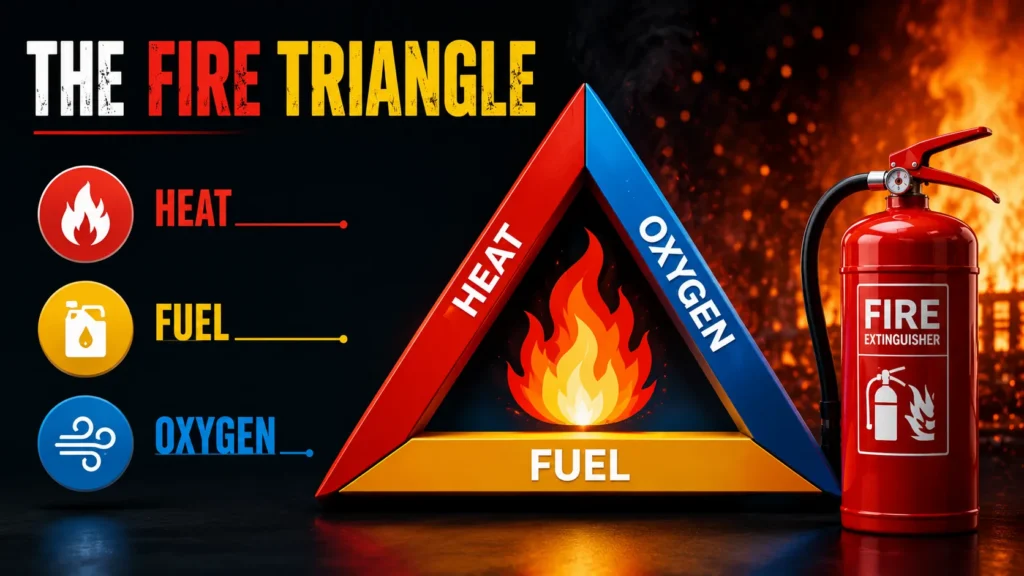
The Fire Triangle is a scientific model that explains the three essential elements required for a fire to start and continue burning: heat, fuel, and oxygen. If any one of these three elements is removed or controlled, the fire cannot sustain itself and will eventually stop. Understanding the Fire Triangle is a fundamental principle of fire safety, fire prevention, and fire risk management.
The Fire Triangle represents the three elements required for a fire to burn: heat, fuel, and oxygen. Removing any one of these elements will stop the combustion process. Fire safety measures prevent fires by controlling ignition sources, managing combustible materials, and reducing oxygen availability during emergencies.
Types of Fires and Their Classification
Fire classification is a system used to categorise fires based on the type of fuel or combustible material involved. Understanding different fire classes is essential for selecting the correct firefighting method, choosing suitable fire extinguishers, and preventing further fire spread. Different countries and safety standards use slightly different classification systems; however, the main fire classes commonly include Class A, B, C, D, Electrical Fires, and Class F/K fires.
A fire should always be assessed before attempting to extinguish it because using the wrong extinguishing agent can increase the danger. For example, applying water to an electrical fire or flammable liquid fire may cause electric shock, fire spread, or violent reactions.
Fire Classes Explained
Class A Fire: Ordinary Combustible Materials
Class A fires involve solid combustible materials that leave ash after burning. These are among the most common types of fires in workplaces, homes, and public buildings.
Common Fuel Sources:
- Wood
- Paper
- Cardboard
- Cloth
- Textiles
- Plastics
- Furniture
Suitable Extinguishing Methods:
- Water extinguishers
- Foam extinguishers
- Dry powder extinguishers
Prevention Measures:
- Maintain good housekeeping
- Store combustible materials safely
- Remove unnecessary waste materials
- Control ignition sources
Class B fires involve flammable liquids that burn through vapour release rather than the liquid itself. These fires can spread quickly because vapours may ignite when exposed to heat or sparks.
Common Fuel Sources:
- Petrol
- Diesel
- Oil
- Paints
- Solvents
- Alcohol-based liquids
Suitable Extinguishing Methods:
- Foam extinguishers
- Dry powder extinguishers
- Carbon dioxide (CO₂) extinguishers
Prevention Measures:
- Store flammable liquids in approved containers
- Control ignition sources
- Ensure proper ventilation
- Follow hazardous material handling procedures
Important: Water should not normally be used on Class B fires because it can spread burning liquids.
Class C Fire: Flammable Gas Fires
Class C fires involve gases that can ignite and create rapid flame spread or explosion risks.
Common Fuel Sources:
- LPG
- Natural gas
- Propane
- Butane
- Hydrogen
Suitable Extinguishing Methods:
- Dry powder extinguishers
- Gas supply isolation where possible
Prevention Measures:
- Regular gas system inspections
- Leak detection
- Safe storage of gas cylinders
- Proper ventilation
Important: The safest response is often to stop the gas supply if it can be done without risk.
Class D Fire: Combustible Metal Fires
Class D fires involve combustible metals that require specialist firefighting methods because they can react dangerously with common extinguishing agents.
Common Fuel Sources:
- Magnesium
- Aluminium powder
- Titanium
- Sodium
- Lithium
Suitable Extinguishing Methods:
- Specialist dry powder extinguishers designed for metal fires
Prevention Measures:
- Safe handling of metal powders
- Proper storage procedures
- Specialist training
Important: Water and standard extinguishing agents can make some metal fires more dangerous.
Electrical Fires (E Class in Some Countries)
Electrical fires involve equipment or systems containing electrical energy. Although electricity itself does not burn, electrical faults can create heat sources that ignite surrounding materials.
Common Causes:
- Faulty wiring
- Overloaded circuits
- Damaged electrical equipment
- Short circuits
- Poor maintenance
Examples:
- Computers
- Electrical panels
- Machinery
- Servers
- Appliances
Suitable Extinguishing Methods:
- Carbon dioxide (CO₂) extinguishers
- Dry powder extinguishers
Prevention Measures:
- Regular electrical inspections
- Avoid overloading circuits
- Maintain equipment properly
- Replace damaged cables
Important: Never use water on live electrical equipment due to the risk of electric shock.
Class F / Class K Fire: Cooking Oil and Fat Fires
Class F (known as Class K in the USA) fires involve cooking oils and fats, commonly found in commercial kitchens. These fires can reach extremely high temperatures and require special extinguishing agents.
Common Fuel Sources:
- Cooking oils
- Vegetable oils
- Animal fats
- Deep-fat fryers
Suitable Extinguishing Methods:
- Wet chemical extinguishers
Prevention Measures:
- Maintain kitchen equipment
- Control cooking temperatures
- Clean grease deposits regularly
- Train kitchen staff
Important: Water must never be used on burning oil because it can cause a dangerous fireball effect.
Fire Classification Comparison Table
| Fire Class | Fuel Type | Common Examples | Suitable Extinguisher |
|---|---|---|---|
| Class A | Solid combustibles | Wood, paper, textiles | Water, Foam, Dry Powder |
| Class B | Flammable liquids | Petrol, oil, solvents | Foam, CO₂, Dry Powder |
| Class C | Flammable gases | LPG, propane, natural gas | Dry Powder |
| Class D | Combustible metals | Magnesium, lithium | Specialist Metal Powder |
| Electrical | Electrical equipment | Computers, machinery, panels | CO₂, Dry Powder |
| Class F/K | Cooking oils and fats | Deep fryers, kitchen oils | Wet Chemical |
What Are Fire Prevention Methods?
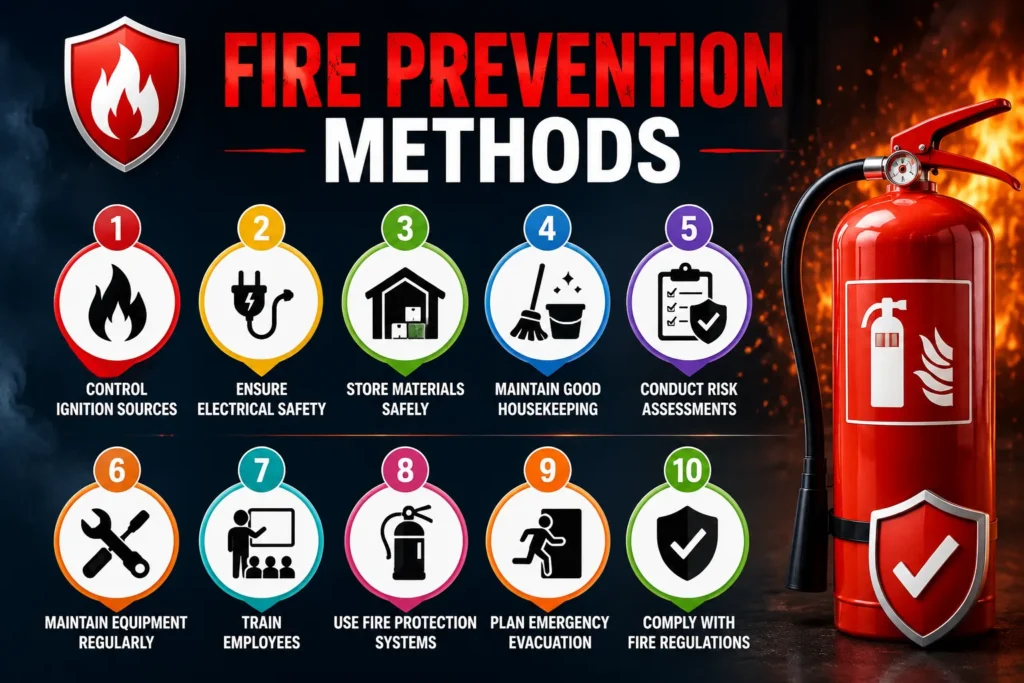
Fire prevention methods are the practices, procedures, and control measures used to reduce the likelihood of fires starting by identifying hazards, controlling ignition sources, managing combustible materials, and promoting safe behaviour. Effective fire prevention focuses on stopping fires before they occur through risk assessment, proper maintenance, safety training, and good housekeeping practices.
Fire prevention is one of the most important parts of fire safety because preventing a fire from starting is safer and more effective than trying to control it after ignition. A strong fire prevention strategy combines technical controls, organisational procedures, and individual awareness to minimise fire risks in homes, workplaces, construction sites, and industrial environments.
Key Fire Prevention Methods
1. Identify and Control Fire Hazards
The first step in fire prevention is recognising potential hazards that could create a fire. A fire risk assessment helps identify sources of heat, combustible materials, and unsafe practices.
Common fire hazards include:
- Faulty electrical equipment
- Flammable liquids and gases
- Poor storage practices
- Uncontrolled heat sources
- Accumulated combustible waste
- Unsafe cooking or heating equipment
Prevention measures:
- Conduct regular fire risk assessments
- Inspect workplaces and buildings regularly
- Remove unnecessary fire hazards
- Implement appropriate control measures
2. Control Ignition Sources
Fires require a source of heat or ignition. Controlling ignition sources reduces the possibility of fire starting.
Common ignition sources include:
- Open flames
- Electrical sparks
- Hot surfaces
- Welding and cutting activities
- Smoking materials
- Overheated machinery
Prevention measures:
- Maintain electrical systems
- Use permits for hot work activities
- Keep heat sources away from combustible materials
- Establish smoking control areas
3. Maintain Electrical Safety
Electrical faults are one of the leading causes of workplace and residential fires. Proper electrical maintenance helps prevent overheating, sparks, and equipment failure.
Electrical fire prevention methods:
- Inspect electrical installations regularly
- Avoid overloading sockets and circuits
- Replace damaged cables and equipment
- Use certified electrical appliances
- Maintain electrical panels and machinery
4. Store Flammable Materials Safely
Flammable materials can quickly increase fire risk if they are poorly stored or handled incorrectly.
Safe storage practices include:
- Store chemicals in approved containers
- Keep flammable liquids away from ignition sources
- Use appropriate storage cabinets
- Maintain proper ventilation
- Label hazardous substances clearly
5. Maintain Good Housekeeping Standards
Poor housekeeping can allow fires to start and spread quickly. Keeping areas clean and organised reduces available fuel for fires.
Good housekeeping practices include:
- Removing waste regularly
- Keeping escape routes clear
- Preventing accumulation of combustible materials
- Maintaining clean work areas
- Proper disposal of flammable waste
6. Install and Maintain Fire Protection Systems
Fire protection equipment helps detect and control fires at an early stage.
Important systems include:
- Fire alarm systems
- Smoke detectors
- Fire extinguishers
- Automatic sprinkler systems
- Emergency lighting
- Fire doors
Prevention requires:
- Regular inspection
- Testing and maintenance
- Immediate repair of faults
7. Provide Fire Safety Training
Training helps people understand fire hazards and respond correctly during emergencies.
Fire safety training should cover:
- Fire prevention responsibilities
- Types of fire hazards
- Correct extinguisher use
- Emergency evacuation procedures
- Fire reporting processes
A trained workforce is more capable of preventing unsafe situations and taking appropriate action during emergencies.
8. Develop Safe Working Procedures
Organisations should establish procedures that reduce fire risks during daily operations.
Examples include:
- Hot work permits
- Safe chemical handling procedures
- Equipment shutdown procedures
- Smoking policies
- Emergency response plans
9. Conduct Regular Fire Risk Assessments
A fire risk assessment helps organisations identify hazards, evaluate risks, and implement effective controls.
The process includes:
- Identifying fire hazards
- Identifying people at risk
- Evaluating existing controls
- Implementing improvements
- Reviewing and updating the assessment
10. Ensure Safe Evacuation Planning
Although evacuation does not prevent fires from starting, it reduces the consequences of fire incidents.
Effective planning includes:
- Clearly marked escape routes
- Emergency exits
- Assembly points
- Fire drills
- Trained fire wardens
Fire Prevention Methods Summary Table
| Fire Prevention Method | Purpose |
|---|---|
| Fire Risk Assessment | Identify and control fire hazards |
| Electrical Maintenance | Prevent electrical ignition sources |
| Safe Storage | Reduce risks from flammable materials |
| Good Housekeeping | Remove unnecessary fuel sources |
| Equipment Maintenance | Prevent overheating and failures |
| Fire Safety Training | Improve awareness and behaviour |
| Hot Work Controls | Manage high-risk activities |
| Fire Protection Maintenance | Ensure systems work effectively |
| Emergency Planning | Reduce impact during incidents |
Fire Prevention vs Fire Protection
| Fire Prevention | Fire Protection |
|---|---|
| Stops fires from starting | Reduces damage after a fire starts |
| Controls hazards and ignition sources | Uses alarms, extinguishers, sprinklers |
| Focuses on risk reduction | Focuses on detection and response |
| Includes training and safe practices | Includes active and passive systems |
What Is a Fire Protection System?
A fire protection system is a combination of equipment, technologies, building features, and procedures designed to detect, control, suppress, and limit the impact of fires while protecting people, property, and critical assets. Fire protection systems work by providing early warning, reducing fire spread, supporting safe evacuation, and assisting emergency response during a fire incident.
A complete fire protection system includes both active fire protection measures that detect or fight fires and passive fire protection measures that prevent fire and smoke from spreading through a building. These systems are an essential part of fire safety management and are implemented in residential buildings, commercial properties, industrial facilities, hospitals, schools, and other high-risk environments.
Main Objectives of Fire Protection Systems
The primary objectives of fire protection systems are to:
- Detect fires at the earliest possible stage
- Provide warnings to occupants and emergency responders
- Control or extinguish fires before they spread
- Protect escape routes and critical areas
- Reduce property damage and business interruption
- Support safe evacuation during emergencies
- Improve overall fire safety performance
Types of Fire Protection Systems
Fire protection systems are generally divided into two main categories:
- Active Fire Protection Systems
- Passive Fire Protection Systems
1. Active Fire Protection Systems
Active fire protection systems require movement, operation, or activation to detect, control, or extinguish a fire. These systems usually respond automatically or require human intervention during a fire emergency.
Fire Detection and Alarm Systems
Fire detection systems identify signs of fire, such as smoke, heat, or flames, and provide an early warning.
Components include:
- Smoke detectors
- Heat detectors
- Flame detectors
- Manual call points
- Fire alarm control panels
- Audible and visual alarms
Purpose:
- Provide early warning
- Allow safe evacuation
- Enable faster emergency response
Automatic Sprinkler Systems
Automatic sprinkler systems release water when heat from a fire activates individual sprinkler heads.
Benefits include:
- Controls fire growth
- Reduces fire spread
- Protects buildings and occupants
- Provides automatic fire suppression
Sprinklers are commonly used in:
- Offices
- Shopping centres
- Warehouses
- Hotels
- Industrial buildings
Fire Suppression Systems
Fire suppression systems use specialised agents to control or extinguish fires where water may not be suitable.
Examples include:
- Carbon dioxide (CO₂) systems
- Foam suppression systems
- Clean agent systems
- Dry chemical systems
Common applications:
- Data centres
- Electrical rooms
- Industrial facilities
- Chemical storage areas
Portable Fire Extinguishers
Fire extinguishers provide immediate response to small fires before they grow.
Common types include:
- Water extinguishers
- Foam extinguishers
- Carbon dioxide extinguishers
- Dry powder extinguishers
- Wet chemical extinguishers
Correct selection depends on the fire classification and fuel involved.
2. Passive Fire Protection Systems
Passive fire protection systems are built into the structure of a building to prevent fire and smoke from spreading. They do not require activation but work continuously to maintain protection.
Fire Doors
Fire doors are specially designed doors that resist fire and smoke for a specific period.
They help:
- Protect escape routes
- Limit fire spread
- Provide safe evacuation time
Fire Compartmentation
Fire compartmentation divides buildings into separate areas using fire-resistant walls, floors, and barriers.
Purpose:
- Slow fire development
- Prevent fire movement between areas
- Protect occupants and property
Fire-Resistant Building Materials
Special materials help maintain structural stability during fire conditions.
Examples:
- Fire-resistant walls
- Fire-rated ceilings
- Fire-resistant glazing
- Protective coatings
Fire Stopping Systems
Fire stopping prevents fire and smoke from passing through gaps and openings in fire-rated structures.
Common applications:
- Cable penetrations
- Pipe openings
- Service ducts
- Building joints
Fire Protection System Components Overview
| System Component | Function |
|---|---|
| Fire Alarm System | Detects and warns about fire |
| Smoke Detectors | Identify smoke at early stages |
| Sprinkler Systems | Automatically suppress fires |
| Fire Extinguishers | Provide immediate firefighting response |
| Fire Doors | Prevent fire and smoke spread |
| Fire Compartments | Contain fire within defined areas |
| Emergency Lighting | Supports safe evacuation |
| Fire Suppression Systems | Extinguish specialised fires |
What Is Fire Risk Assessment?
A fire risk assessment is a systematic process of identifying fire hazards, evaluating the risks they create, and implementing control measures to prevent fires and protect people, property, and the environment. It involves examining potential ignition sources, combustible materials, fire protection systems, emergency procedures, and the safety of people who may be affected by a fire.
A fire risk assessment is a fundamental part of effective fire safety management. It helps organisations understand their fire risks, determine appropriate preventive actions, improve emergency preparedness, and ensure that suitable fire protection measures are in place. Regular fire risk assessments allow hazards to be identified and controlled before they develop into serious fire incidents.
Why Is Fire Risk Assessment Important?
Fire risk assessment is important because it helps to:
- Identify potential fire hazards before incidents occur
- Reduce the likelihood of fires starting
- Protect employees, visitors, and members of the public
- Ensure safe evacuation during emergencies
- Evaluate the effectiveness of existing fire safety measures
- Improve workplace fire safety standards
- Reduce property damage and business disruption
- Support compliance with fire safety requirements
A proactive fire risk assessment approach focuses on prevention rather than reaction, helping organisations control risks before they result in harm.
The Main Objectives of Fire Risk Assessment
1. Identify Fire Hazards
The first objective is to identify anything that could cause a fire.
This includes:
Sources of Ignition:
- Electrical equipment
- Open flames
- Hot surfaces
- Welding activities
- Smoking materials
Sources of Fuel:
- Paper and packaging
- Wood and plastics
- Flammable liquids
- Gases and chemicals
Sources of Oxygen:
- Natural air supply
- Oxygen cylinders
- Ventilation systems
2. Identify People at Risk
A fire risk assessment considers everyone who may be affected by a fire, including:
- Employees
- Visitors
- Contractors
- Customers
- Vulnerable persons
- People with disabilities
Special consideration should be given to people who may require additional assistance during evacuation.
3. Evaluate and Control Fire Risks
After identifying hazards, the next step is assessing the likelihood and potential impact of a fire.
Control measures may include:
- Removing unnecessary combustible materials
- Improving storage arrangements
- Maintaining electrical systems
- Installing fire detection systems
- Providing fire safety training
- Improving emergency procedures
4. Review Fire Protection Measures
A fire risk assessment evaluates whether existing fire safety systems are suitable and effective.
This includes checking:
- Fire alarms
- Fire extinguishers
- Emergency lighting
- Fire doors
- Escape routes
- Sprinkler systems
- Fire signage
5. Develop Emergency Procedures
A good fire risk assessment ensures that people know what to do during a fire emergency.
Emergency planning includes:
- Evacuation procedures
- Emergency exits
- Assembly points
- Fire drills
- Fire warden responsibilities
The 5 Steps of Fire Risk Assessment
| Step | Description |
|---|---|
| Step 1: Identify Fire Hazards | Find ignition sources, fuel, and oxygen sources |
| Step 2: Identify People at Risk | Determine who could be harmed and their needs |
| Step 3: Evaluate Fire Risks | Assess risks and introduce control measures |
| Step 4: Record and Implement Findings | Document actions and improve safety arrangements |
| Step 5: Review and Update | Regularly check and update the assessment |
What Are Workplace Fire Safety Responsibilities?
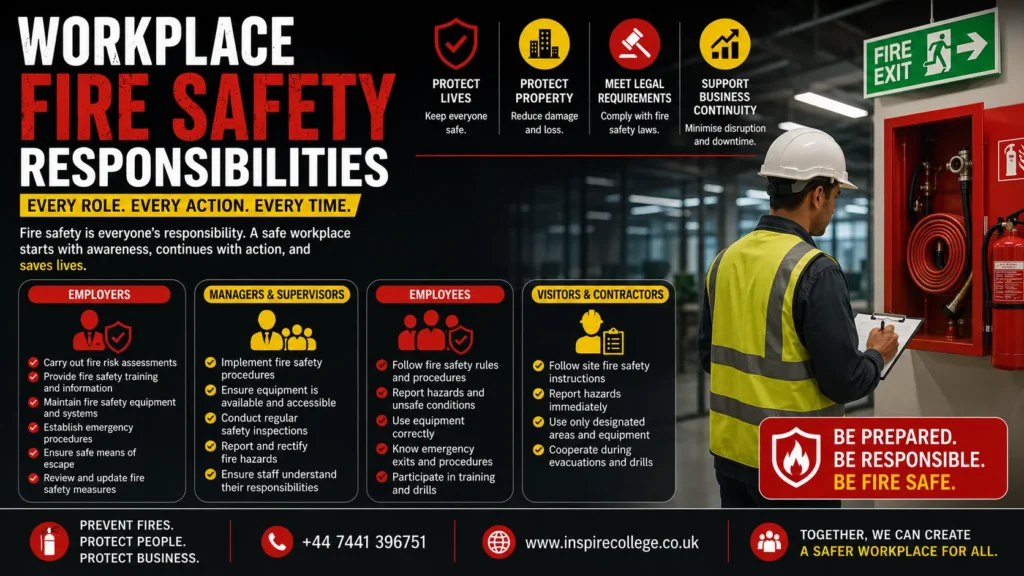
Workplace fire safety responsibilities are the duties and actions required by employers, employees, managers, and other responsible persons to prevent fires, control fire risks, protect people, and ensure a safe response during fire emergencies. Effective workplace fire safety depends on everyone understanding their role in identifying hazards, following safety procedures, maintaining fire protection measures, and supporting emergency arrangements.
Fire safety is a shared responsibility. While employers and responsible persons have the primary duty to establish and manage fire safety systems, employees also play an important role by following procedures, reporting hazards, and taking appropriate action to prevent fire incidents.
Employer and Responsible Person Fire Safety Responsibilities
1. Conduct Fire Risk Assessments
One of the main responsibilities of employers is ensuring that suitable fire risk assessments are completed.
This involves:
- Identifying fire hazards
- Assessing risks to employees and visitors
- Implementing control measures
- Reviewing assessments regularly
- Updating procedures when workplace conditions change
A fire risk assessment provides the foundation for an effective workplace fire safety strategy.
2. Implement Fire Prevention Measures
Employers must take reasonable steps to prevent fires from occurring.
Fire prevention responsibilities include:
- Maintaining electrical systems and equipment
- Controlling ignition sources
- Managing flammable materials safely
- Maintaining good housekeeping standards
- Reducing unnecessary combustible materials
- Establishing safe working procedures
3. Provide Suitable Fire Protection Systems
Employers are responsible for ensuring appropriate fire protection systems are installed, maintained, and available.
These may include:
- Fire alarm systems
- Smoke detectors
- Fire extinguishers
- Emergency lighting
- Fire doors
- Sprinkler systems
- Fire suppression systems
All equipment should be regularly inspected, tested, and maintained.
4. Develop Emergency Fire Procedures
Every workplace should have clear emergency procedures that explain what to do if a fire occurs.
Employers should establish:
- Emergency evacuation plans
- Escape routes
- Emergency exits
- Assembly points
- Fire alarm procedures
- Roles of fire wardens or marshals
5. Provide Fire Safety Training
Employers should provide appropriate fire safety training to ensure employees understand workplace fire risks and emergency actions.
Training should cover:
- Fire prevention practices
- Fire hazard awareness
- Fire evacuation procedures
- Correct use of fire extinguishers
- Reporting fire hazards
- Responsibilities during emergencies
6. Appoint and Train Fire Wardens or Fire Marshals
Many workplaces appoint trained fire wardens to support emergency arrangements.
Their responsibilities may include:
- Assisting with evacuations
- Checking designated areas
- Directing people to safe exits
- Reporting fire safety concerns
- Supporting emergency services
Employee Fire Safety Responsibilities
1. Follow Workplace Fire Safety Procedures
Employees must understand and follow workplace fire safety rules, including:
- Following evacuation instructions
- Keeping escape routes clear
- Using equipment safely
- Following emergency procedures
2. Report Fire Hazards Immediately
Employees should report any unsafe conditions that could increase fire risk.
Examples include:
- Damaged electrical equipment
- Blocked emergency exits
- Unsafe storage of materials
- Fire equipment damage
- Unusual smells or overheating equipment
Early reporting helps prevent fires before they occur.
3. Maintain Good Housekeeping
Employees contribute to fire prevention by maintaining clean and organised work areas.
Responsibilities include:
- Proper waste disposal
- Safe storage of materials
- Keeping corridors and exits clear
- Removing unnecessary combustible items
4. Participate in Fire Safety Training and Drills
Employees should actively participate in:
- Fire safety training sessions
- Emergency evacuation drills
- Awareness programmes
Regular participation improves confidence and emergency response.
5. Use Fire Equipment Correctly
Employees should only use fire extinguishers or other fire equipment if they are trained and it is safe to do so.
They should understand:
- Different fire classes
- Correct extinguisher selection
- Safe firefighting limits
- When to evacuate instead
Workplace Fire Safety Responsibilities Summary Table
| Responsible Person | Key Responsibilities |
|---|---|
| Employer | Provide safe workplace, conduct risk assessments, implement fire controls |
| Manager/Supervisor | Monitor safety procedures and ensure employees follow requirements |
| Fire Warden/Marshal | Support evacuation and emergency response |
| Employee | Follow procedures, report hazards, attend training |
| Maintenance Team | Maintain fire safety equipment and systems |
| Contractors/Visitors | Follow workplace fire safety rules |
Why Are Workplace Fire Safety Responsibilities Important?
Clear responsibilities help organisations:
- Prevent workplace fires
- Reduce injuries and fatalities
- Improve emergency response
- Protect property and business operations
- Build a strong safety culture
- Ensure effective fire risk management
When everyone understands their role, fire hazards can be identified earlier and controlled more effectively.
Workplace fire safety responsibilities involve preventing fires, identifying hazards, maintaining fire protection systems, providing training, and ensuring safe emergency procedures. Employers are responsible for managing fire risks and providing protection measures, while employees must follow safety procedures, report hazards, and participate in fire safety activities.
Recommended SEO Enhancement for Your Blog
Add a visual section:
“Workplace Fire Safety Responsibilities: Employer vs Employee”
| Employer Duties | Employee Duties |
|---|---|
| Conduct fire risk assessments | Follow fire procedures |
| Maintain fire equipment | Report hazards |
| Provide training | Attend safety training |
| Create evacuation plans | Keep exits clear |
| Appoint fire wardens | Participate in drills |
Firefighter Salary by Country
Firefighter salaries vary significantly around the world depending on factors such as country, location, cost of living, experience, rank, employer, and level of responsibility. Entry-level firefighters usually earn lower salaries, while experienced firefighters, specialist officers, and managerial positions can achieve significantly higher earnings.
The following table provides an approximate overview of firefighter salaries across different countries:
| Country | Starting Salary / Entry Level | Average Annual Salary | Factors Affecting Salary |
|---|---|---|---|
| United States | Around $50,000 per year | Approximately $58,000–$80,000+ per year | Salaries vary by state, city size, department type, overtime opportunities, and experience level. Urban fire departments often offer higher earning potential. |
| Canada | Around $75,000 per year for fully trained firefighters in major cities | Can increase up to $120,000 per year with experience and seniority | Earnings depend on province, municipality, rank, years of service, and additional responsibilities. |
| Australia | Approximately AU $70,000 per year at entry level | Around AU $70,000–$120,000 per year | Salary depends on state, fire service organisation, qualifications, specialist roles, and years of experience. |
| United Kingdom | Around £32,244 per year after completing training | Can rise up to £61,667 per year for senior and managerial roles | Pay varies according to rank, service length, location, and leadership responsibilities. |
| Pakistan | Approximately PKR 1.6 million per year on average | Varies significantly based on rank, province, and organisation | Salaries depend on government department, municipal authority, experience, and position held. |
Factors That Influence Firefighter Salaries
Several factors determine how much a firefighter can earn, including:
1. Experience and Seniority
Firefighters with more years of service generally receive higher salaries due to increased skills, responsibilities, and leadership roles.
2. Location and Cost of Living
Firefighters working in major cities or regions with higher living costs often receive higher compensation compared with rural areas.
3. Rank and Career Progression
Promotions to positions such as:
- Fire Officer
- Station Officer
- Fire Inspector
- Fire Chief
- Emergency Management Specialist
can significantly increase earning potential.
4. Specialist Skills and Qualifications
Additional training in areas such as:
- Fire risk assessment
- Fire investigation
- Hazardous materials response
- Emergency management
- Fire safety management
can improve career opportunities and salary prospects.
Career Outlook for Fire Safety Professionals
Fire safety careers continue to grow as organisations, governments, and industries place greater importance on fire prevention, emergency preparedness, and risk management. Professionals with recognised fire safety qualifications can progress into roles such as:
- Fire Safety Officer
- Fire Risk Assessor
- Fire Safety Manager
- Fire Protection Specialist
- Health and Safety Professional
Firefighter salaries depend on location, experience, rank, and employer. Average annual salaries range from approximately $50,000–$80,000+ in the United States, £32,244–£61,667 in the United Kingdom, AU $70,000–$120,000 in Australia, up to $120,000 in senior Canadian roles, while salaries in Pakistan vary according to government department, province, and rank.
Frequently Asked Questions (FAQs)
Have questions about business management? Explore answers to some of the most frequently asked questions about Business management careers, responsibilities, qualifications, skills, salary expectations, industry demand, sustainability initiatives, and future career opportunities in 2026 and beyond.